
When we picture a luxury bespoke kitchen, our minds often jump to the grandest features: a sweeping central island topped with veined quartz, a premium range cooker, or a beautifully painted run of Shaker cabinetry.
While these showstoppers define the room’s visual impact, the true success of a bespoke kitchen lies in the details you don’t see immediately. A genuinely premium kitchen doesn’t just look beautiful in a photograph; it behaves beautifully under pressure. It anticipates how you move, cook, and socialise.
If you are planning a kitchen renovation, here are five subtle, highly functional design choices that elevate a kitchen from a standard high-street fit-out to a true architectural masterpiece.
1. The Integrated “Appliance Garage”
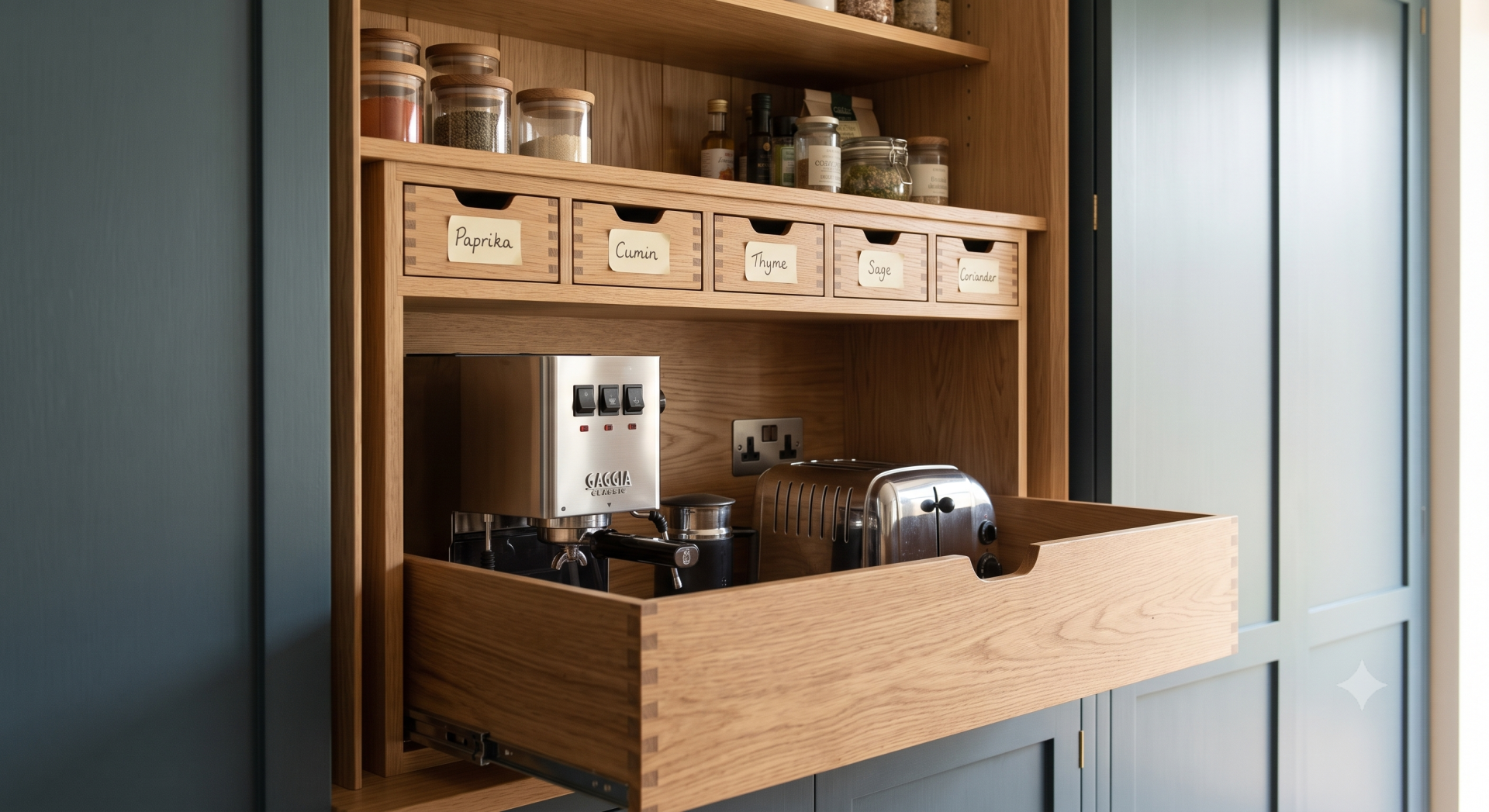
A beautiful kitchen counter is a terrible thing to waste on a tangle of black plastic kettle leads and bulky toasters. The modern solution is a dedicated, counter-level appliance station—often referred to as an appliance garage.
By housing items like your coffee machine, espresso grinder, and toaster behind elegant, pocket doors or pull-out larders, you keep the workspace pristine. Crucially, a bespoke build means power outlets are integrated subtly into the solid timber back-panels, allowing you to use your appliances exactly where they sit, then simply slide the cabinet shut to hide the morning rush.
2. Tailored Drawer Depths and Dovetailed Boxes
Standard, mass-produced kitchens rely on uniform drawer sizes, forcing you to stack frying pans five-deep or lose small utensils in vast, empty spaces.
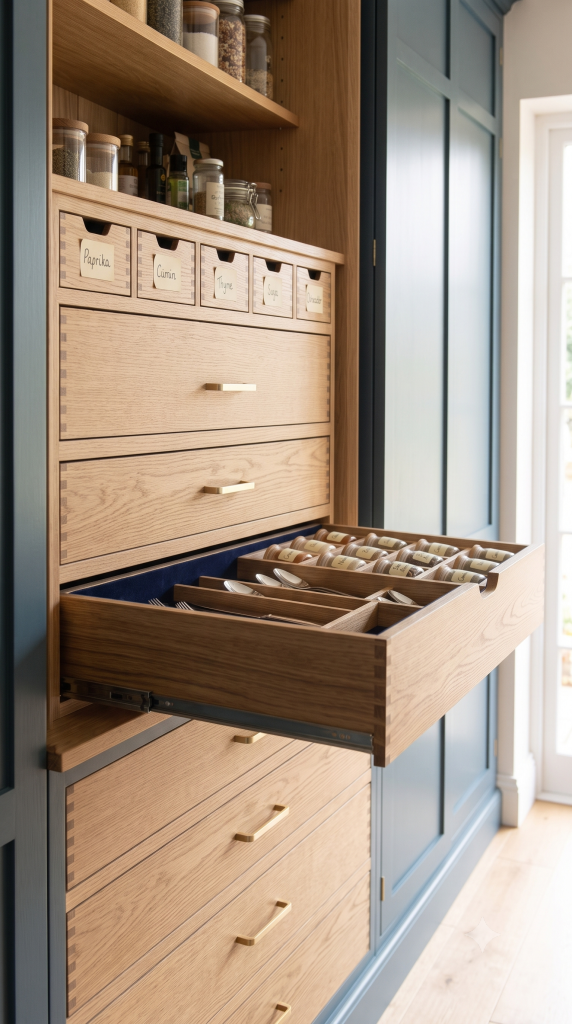
Bespoke carpentry approaches storage from the inside out. In our Heckington workshop, we engineer drawers to fit your specific inventory. Deep, solid-oak drawer boxes with traditional dovetail joinery are crafted for heavy cast-iron cookware, while shallow, velvet-lined or segmented timber inserts are built to organise delicate spices and cutlery perfectly.
3. Concealed Structural Quirks
Many classic UK properties—and even modern extensions—are full of structural complexities. Whether it’s a protruding chimney breast, an awkwardly placed steel RSJ beam, or a low, sloped ceiling, standard modular kitchen units require clumsy filler panels to bridge the gaps.
A bespoke design views these quirks as opportunities. Cabinetry can be scribed and built around structural elements. A chimney breast can be seamlessly integrated into a run of flush, floor-to-ceiling larder units, ensuring you don’t lose a single millimetre of potential storage space.
4. Pocket Doors for Seamless Flow
In open-plan UK kitchens, space is fluid. Standard cabinet doors swing outward into the room, creating physical roadblocks when multiple people are cooking or hosting.
Implementing pocket doors—doors that glide open and then tuck smoothly away into recesses within the cabinet frame—changes the entire dynamic of the room. It allows your breakfast pantry or dry-bar to remain open and easily accessible during a busy morning or evening dinner party, without compromising the room’s physical footprint or flow.
5. Hand-Painted Finishes for Timeless Longevity
High-street kitchens often feature vinyl-wrapped or factory lacquered doors. While durable initially, if they get scratched or chipped over time, they are incredibly difficult to repair and often require full replacement.
A premium bespoke kitchen is hand-painted on-site after installation. Not only does this give the cabinetry a rich, subtly textured depth of colour that catches the British natural light beautifully, but it is also completely future-proof. A minor scuff can be touched up in seconds, and if your interior tastes change in ten years, the entire kitchen can be sanded down and repainted in a fresh palette—extending its lifespan for generations.
Ready to Design Your Own Enclave?
A kitchen should be designed around your life, not a catalogue. If you’re ready to explore how precision engineering and hand-finished carpentry can transform the heart of your home, [Book a Design Consultation with our team today].