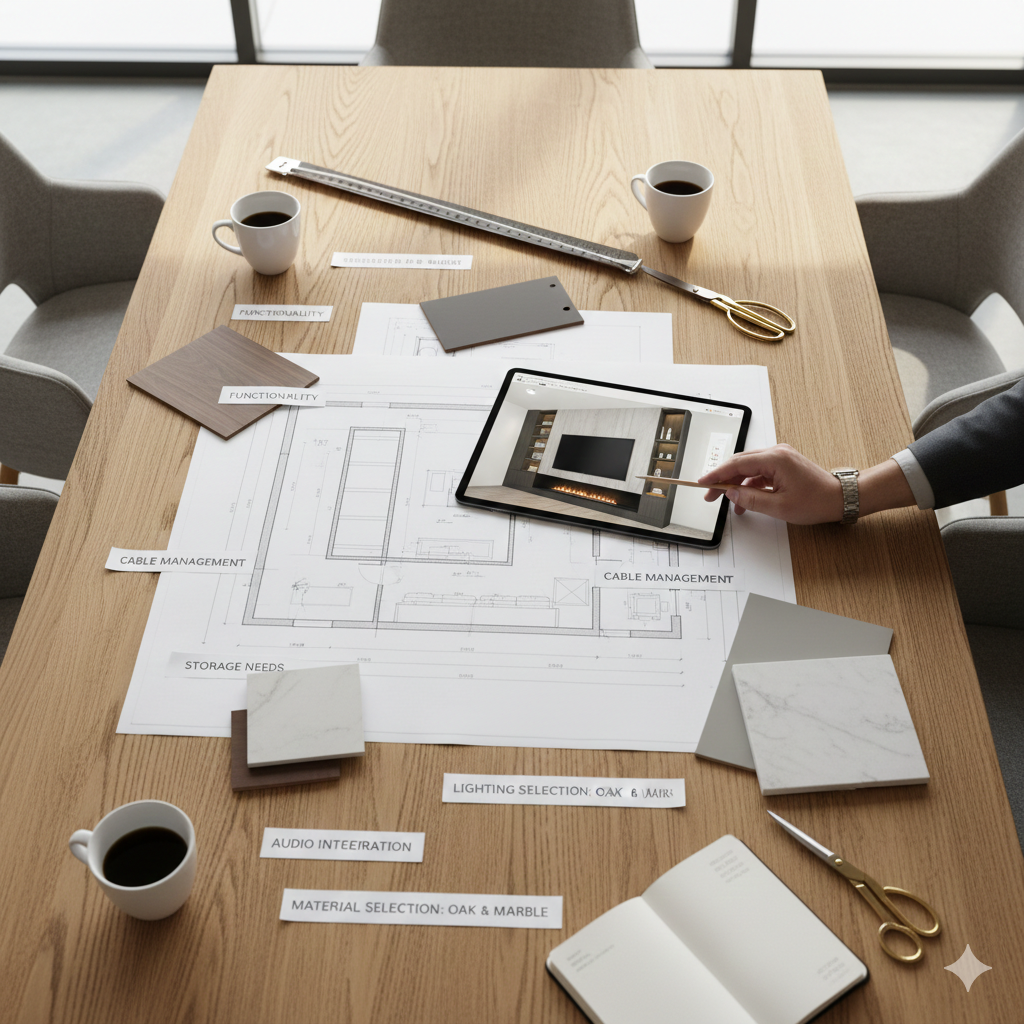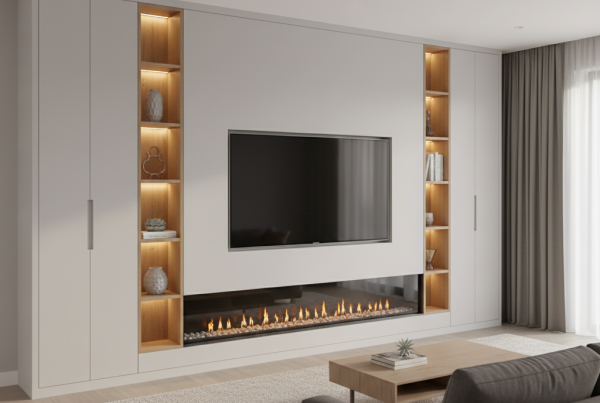

So, you’re convinced a media wall is the upgrade your home needs. But where do you begin with the design process? A truly successful media wall isn’t just about good looks; it’s about seamless integration with your lifestyle and space. Here are the key factors to consider when planning your dream media wall.
1. Functionality First: What Do You Need It to Do? Before aesthetics, think about practicality.
-
TV Size & Type: Measure your TV or decide on your new one. Will it be wall-mounted or freestanding?
-
Storage Needs: How many devices do you have (soundbar, gaming consoles, set-top boxes, streaming devices)? Do you need space for DVDs/Blu-rays, books, decorative items, or even hidden compartments for less attractive items?
-
Audio Integration: Where will speakers go? Will they be built-in, visible, or discreetly hidden behind acoustic fabric?
-
Cable Management: This is crucial! Plan for sufficient conduits and access points to keep all cables completely hidden.
-
Additional Features: Do you want integrated lighting (LED strips, spotlights), a built-in electric fireplace, or even a bar area?
2. Style & Aesthetics: Matching Your Home’s Personality Your media wall should complement your home’s existing décor.
-
Modern & Minimalist: Clean lines, handle-less doors, neutral colours, and flush surfaces for a sleek, contemporary look.
-
Traditional & Classic: Richer timbers, shaker-style doors, more intricate detailing, and classic hardware.
-
Industrial: Exposed shelving, metal accents, and perhaps a concrete-effect finish.
-
Colour Palette: Will it blend in with your walls or provide a contrasting feature? Consider materials like painted MDF, solid timber, veneers, or even stone/marble effects.
3. Space Optimisation: Making the Most of Your Room Consider the dimensions and layout of your living area.
-
Wall Dimensions: Accurately measure the width and height available.
-
Room Flow: Ensure the media wall doesn’t impede walkways or block natural light.
-
Viewing Distance: Position the TV at an optimal height and distance for comfortable viewing from your primary seating area.
4. Lighting Integration: Setting the Mood Lighting can transform your media wall.
-
Backlighting: LED strips behind the TV or shelves create a dramatic effect and reduce eye strain.
-
Accent Lighting: Spotlights within display cabinets highlight decorative items.
-
Dimmer Switches: Allow you to control the ambiance for different activities, from movie nights to casual lounging.
Designing a media wall is an exciting journey that culminates in a truly bespoke piece of furniture. By carefully considering these points, you can create a media wall that is not only visually stunning but also perfectly tailored to your family’s needs and how you live.