
When choosing decorative panels for interiors or cabinetry, the two most common options are solid hardwood panels and veneered panels (typically on MDF or felt backing). At first glance, they can look quite similar — but beneath the surface, they perform very differently.
Here’s a clear and balanced look at the pros and cons of each, so you can decide which is the right fit for your project.
Solid Hardwood Panels
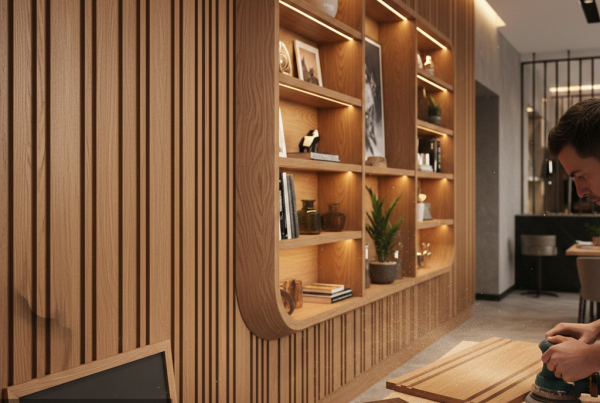
Our solid hardwood panels are made from premium-grade, sustainably sourced timber — not just a surface layer. Each piece has its own grain, character, and depth, bringing a warmth and authenticity that veneered panels can’t replicate.
The Pros:
-
Unmatched Natural Beauty: Each panel has unique grain and tone, adding real character and depth to a space.
-
Premium Finishes ‘Take’ Better: High-end oils, stains, and lacquers penetrate deep into the grain, enhancing the natural beauty of the wood.
-
Fully Machinable: Solid panels can be routed, fluted, chamfered, or detailed with precision — allowing for decorative patterns, custom edges, and CNC designs without risking veneer breakthrough.
-
Built to Last: Solid hardwood can be sanded, refinished, and restored many times over its lifetime, keeping it looking fresh for decades.
-
Sustainably Sourced: Responsibly harvested timber for an eco-friendly, long-lasting product.
-
Ages Gracefully: Solid wood develops a beautiful patina over time rather than wearing out.
The Cons:
-
Higher Upfront Cost: Solid wood is a premium product, but its lifespan and reusability make it a true long-term investment.
-
Natural Movement: Wood can expand or contract slightly with changes in humidity, though correct installation minimises this.
-
Heavier Material: Requires careful handling and secure fixing during installation.
Veneered Panels (Felt or MDF Backed)
Veneered panels are made by applying a thin layer of real wood over a backing substrate such as MDF or felt. This gives the appearance of solid wood while keeping costs and weight lower.
The Pros:
-
Affordable: A more budget-friendly alternative to solid hardwood.
-
Lightweight: Easier to handle and install, particularly on ceilings or large wall areas.
-
Good Acoustic Performance: Felt-backed panels help reduce echo and absorb sound in open-plan environments.
-
Consistent Finish: Ideal for achieving a very uniform look across large areas.
The Cons:
-
Limited Machinability: Deep routing or profiling risks cutting through the veneer layer, exposing the substrate underneath.
-
Shorter Lifespan: Veneers can peel, bubble, or chip over time — especially in areas exposed to humidity or impact.
-
Non-Refinishable: Once damaged, the surface can’t be sanded or repaired. Replacement is usually the only option.
-
Flat Appearance: Lacks the depth, texture, and grain definition of solid wood.
-
Lower Sustainability: Adhesives and synthetic backings reduce the product’s eco credentials.
The Verdict
If your priority is cost, consistency, or acoustic performance, veneered panels can be a practical choice for certain spaces.
But if you’re after lasting quality, design freedom, and true craftsmanship, solid hardwood panels are the clear winner.
They can be machined into custom designs, finished beautifully, and maintained for decades — offering a level of performance and individuality that veneered products simply can’t match.
👉 Looking for decorative panels that combine natural beauty, durability, and design flexibility? Explore our range of solid hardwood panels — sustainably sourced, expertly crafted, and built to stand the test of time.